Gilligan’s Planet: The Forgotten 1982 CBS Saturday Morning Cartoon That Sent Gilligan Into Space
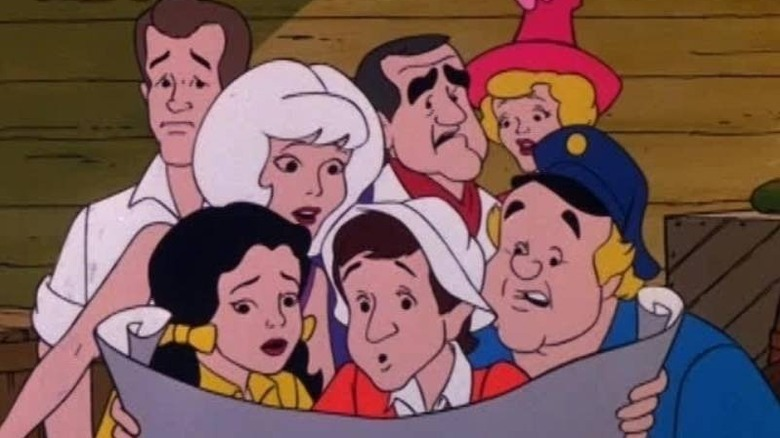
There was a wonderfully strange moment in Saturday morning television when almost any familiar character could be sent into outer space.
And in the fall of 1982, CBS and Filmation actually sent Gilligan there.
Long before Saturday mornings became dominated by toy-driven action franchises, Gilligan’s Planet took one of television’s most recognizable comedy ensembles, loaded them aboard a homemade spaceship, and stranded them all over again—only this time on an alien world.
If you grew up watching cartoons in the early 1980s, there is a decent chance you saw this show. There is also a very good chance you have completely forgotten it existed.
Yes, Gilligan Actually Went to Outer Space
Gilligan’s Planet premiered on CBS on September 18, 1982. Produced by Filmation and MGM/UA Television, it was the second animated spin-off of Gilligan’s Island, following Filmation’s earlier The New Adventures of Gilligan from the 1970s.
The premise managed to be both completely ridiculous and absolutely perfect for Saturday morning television.
After years of being unable to escape their uncharted island, the Professor somehow constructs a functioning spacecraft. Gilligan, the Skipper, the Professor, Mary Ann, Ginger and the Howells finally blast away from their tropical prison.
Victory lasts about as long as you would expect.
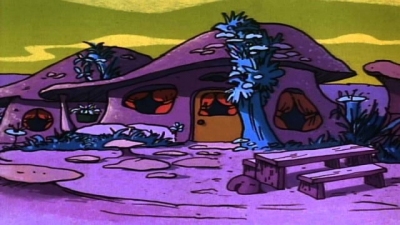
Their journey goes wrong, their spacecraft is damaged, and the castaways crash on a mysterious planet. They have essentially traded palm trees and coconuts for purple landscapes, bizarre vegetation, robots, alien civilizations and intergalactic trouble.

Most of the Original Gilligan’s Island Cast Actually Returned
One of the details that makes Gilligan’s Planet more interesting than the average cartoon adaptation is that Filmation didn’t simply hire sound-alike performers.
Bob Denver returned as Gilligan. Alan Hale Jr. returned as the Skipper. Russell Johnson was back as the Professor. Jim Backus returned as Thurston Howell III, and Natalie Schafer again played Lovey Howell.
Then things got interesting.
Tina Louise did not return to voice Ginger Grant. Instead, Dawn Wells performed two roles, voicing both Mary Ann Summers and Ginger. Listen carefully to an episode today and you are hearing Wells having conversations with herself while attempting to keep two of television’s most famous female characters distinct.
There is another bittersweet piece of franchise history hidden inside the cartoon: Gilligan’s Planet became the final production in which Jim Backus and Alan Hale Jr. performed their familiar roles as Mr. Howell and the Skipper.

Gilligan’s Planet Quietly Marked the End of an Era for Filmation
Here is where Gilligan’s Planet becomes more important to animation history than its goofy premise might suggest.
The series is generally recognized as Filmation’s final cartoon produced for the traditional Saturday morning network television market. Afterward, the studio increasingly turned its attention toward first-run syndication—the distribution model that would soon help make He-Man and the Masters of the Universe an enormous success.
In other words, Gilligan accidentally found himself standing near one of the dividing lines between two eras of children’s television.
There is even a tiny piece of Filmation history hiding in the credits. Animation references identify Gilligan’s Planet as the first Filmation series to use executive producer Lou Scheimer’s familiar signature-style credit rather than the older rotating Scheimer/Norm Prescott presentation.
The show also retained another artifact of an earlier television era: a laugh track. By 1982, canned laughter in animated television was rapidly falling out of fashion, making Gilligan’s Planet one of the final examples of a practice that had once been surprisingly common in Saturday morning cartoons.
Two Future Animation Legends Were Hiding in the Writers’ Room
Perhaps the best piece of trivia involves two names that probably meant very little to children watching CBS in 1982.
Tom Ruegger and Paul Dini both wrote for Gilligan’s Planet.
Ruegger would eventually become one of the major creative forces behind Warner Bros. television animation, with work connected to series including Tiny Toon Adventures, Animaniacs and Batman: The Animated Series.
Dini would likewise become one of the defining writers associated with Batman: The Animated Series and the larger DC animated universe.
Years before those celebrated productions, however, Dini was writing an adventure called “Let Sleeping Minnows Lie” for Gilligan.
Tom Ruegger received writing credits on several episodes, while veteran Filmation director Hal Sutherland directed all 13 installments of the series.
The Episodes Were Much Weirder Than You Remember
Once the castaways were moved into science fiction, the writers suddenly had permission to make the old Gilligan’s Island formula considerably stranger.
In “The Amazing Colossal Gilligan,” Gilligan grows to roughly 50 feet tall after falling into a mysterious liquid. In “Too Many Gilligans,” a cloning device creates multiple versions of the castaways. “Space Pirates” introduces technology capable of shrinking the characters. And in “Super Gilligan,” Gilligan receives a Cosmic Cape that gives him superpowers.
The show even gave Gilligan a new companion named Bumper, a friendly green reptilian alien. Bumper was voiced by Filmation co-founder and executive producer Lou Scheimer himself.
And if the opening sounded oddly familiar to anyone who had watched Filmation’s earlier The New Adventures of Gilligan, there was a reason. The earlier animated show’s theme music was reused, with new narration created to explain how the castaways had gone from being stranded on an island to being stranded among the stars.
Thirteen Episodes—and Then Gilligan’s Space Adventure Was Gone
Only 13 episodes were produced. The original run stretched from September through December 1982, giving CBS enough episodes to keep the program in rotation but not enough to build the kind of enormous library enjoyed by many better-remembered cartoons of the decade.
Its short life probably helps explain why Gilligan’s Planet can feel like something recovered from a half-remembered Saturday morning dream.
It arrived at an unusual moment. The sitcom characters and laugh track belonged to an older television tradition, while the aliens, spaceships and science-fiction concepts pointed toward the increasingly fantasy-heavy cartoons that would dominate the decade.
Within a year, the television animation landscape would be changing dramatically as syndicated series such as He-Man and the Masters of the Universe demonstrated another way cartoons could reach kids beyond the traditional three-network Saturday morning schedule.
Why Gilligan’s Planet Deserves Another Look
Is Gilligan’s Planet one of the masterpieces of 1980s animation? Probably not—and that may be exactly why it is so much fun to rediscover.
It is a genuine pop-culture time capsule: a 1960s sitcom transformed into a 1970s-style Filmation cartoon and then blasted directly into the science-fiction obsessed world of 1982.
It brought together Bob Denver, Alan Hale Jr., Jim Backus, Natalie Schafer, Russell Johnson and Dawn Wells one more time. It featured early writing from future animation giants. It captured Filmation at a major turning point. And somehow, against all logic, the Professor could build an interplanetary spacecraft while still being unable to permanently rescue seven people from their latest predicament.
That might be the most Gilligan’s Island idea imaginable.
Do you remember watching Gilligan’s Planet on CBS Saturday mornings in 1982, or is this one of those cartoons you had completely forgotten existed? Let us know in the comments—and tell us which forgotten Saturday morning cartoon Serpentor’s Lair should revisit next!